For the Doggie Different

Your pet is in good hands with a team of professional groomers, trainers, and care takers at Paws Plaza. 1416 4th St Santa Fe, NM 87505 (505) 820-7529 http://paws-plaza.com/
Showing posts with label Paws Plaza. Show all posts

Wish your dog were a better listener?

Our training philosophy:

Positive Reinforcement Training
Until recently, dog training has focused on the human-dog relationship in such terms as dominance, discipline and punishment. Dogs, like all living organisms, are just trying to get through the day accessing as many pleasant things as possible, while avoiding the unpleasant.
Gaining control of the pleasant (reinforcers) in a dog’s life is a means of behavioral control that is as effective as methods which administer pain and startle.
Dog owners are victims of the lack of correct and accessible science-based information about dogs. The range of misinformation based on some trainers’ opinions can have consumers confused and feeling desperate or frustrated.
Imagine if the same range and quality of information existed about cars. People might be told by “experts” to never change the oil, change the oil daily, or replace the oil with lemon juice!
It is little wonder why pet owners are confused. Despite this spotty history of militaristic and old fashioned training methods of the past, pet dog training and behavior counseling is coming of age through the use of positive reinforcement methods.
By providing you with the ability to more clearly understand how dogs learn, what motivates their behavior and how to trade access to all the good stuff for behaviors you expect, you can accelerate your dog’s learning.

Kids and Dogs: Safety Tips


When a dog bites a kid, it's usually one the pup knows. The best prevention: supervision. Even the most sweet-natured pooch can be provoked. Beyond that, there's plenty you can teach your child about staying safe around Spot.

  1. Be calm around canines. No jumping, screaming, or, of course, yanking tails, pulling fur, or poking eyes.
  2. Nix hugs -- or kisses. Hounds don't like them. But they do like being gently stroked on the back or the side. One spot to avoid: The top of the head -- even a small hand looming above can feel threatening to a dog.
  3. Never sneak up on a pup. Approach from the side.
  4. Leave sleeping (or eating) dogs alone. They're likely to snap if bothered.
  5. Ask the owner before petting a dog you don't know. If he says it's okay, have your kid hand you anything she might be holding (especially if it's edible!). Then, if the dog is calm, tell her to make a fist, palm down (so her fingers are out of the way if the dog nips). If the dog comes forward, tail wagging, it's okay to pet it.

The Paw Plaza Grooming Spa


Grooming Spa Opens: 10 AM – 4 PM Monday – Saturday

  • State of the art grooming salon.
  • Appointments available every day except Sunday.
  • Full service grooming in about 1 hour.
  • One-on-one, customized, private session with you, your dog and the groomer.
  • Comfort your pet while we work.
  • Guide us to give your pet exactly the hair cut you like.
  • Walk-in bath service are available for dogs 25 lb or less without appointment – Although there is a possibility for a short wait. Prices vary depending on size of the dog.
  • We groom cats as well!!  Brushing, bathing, de-shedding and haircuts (by appointment only).


Ten tips for training your dog-


  1. LISTEN TO YOUR DOG

    Learn to listen to your dog. If your dog appears to be uncomfortable meeting another dog, animal or person, don’t insist that he say hello. He’s telling you that he isn’t comfortable for a reason, and you should respect that. Forcing the issue can often result in bigger problems down the line.
  2. BE GENEROUS WITH YOUR AFFECTION

    Most people don’t have a problem being very clear about when they are unhappy with their dogs, but, they often ignore the good stuff. Big mistake! Make sure you give your dog lots of attention when he’s doing the right thing. Let him know when he’s been a good boy. That’s the time to be extra generous with your attention and praise. It’s even okay to be a little over the top.
  3. DOES HE REALLY LIKE IT?

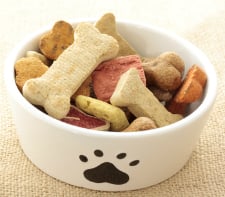
    Just because the bag says “a treat all dogs love” doesn’t mean your dog will automatically love it. Some dogs are very selective about what they like to eat. Soft and chewy treats are usually more exciting for your dog than hard and crunchy treats. Keep your eyes open for what he enjoys.
  4. TELL HIM WHAT YOU WANT HIM TO DO

    There is nothing inherently wrong with telling your dog “no,” except that it doesn’t give him enough information. Instead of telling your dog “no,” tell him what you want him to do. Dogs don’t generalize well, so if your dog jumps up on someone to say hello and you say no, he may jump higher or he may jump to the left side instead of the right. A better alternative would be to ask him to “sit.” Tell him what you want him to do in order to avoid confusion.
  5. BE CONSISTENT

    Whenever you’re training your dog, it’s important to get as many family members involved as possible so everyone’s on the same page. If you are telling your dog “off” when he jumps on the couch and someone else is saying “down,” while someone else is letting him hang out up there, how on earth is he ever going to learn what you want? Consistency will be the key to your success.
  6. HAVE REALISTIC EXPECTATIONS

    Changing behavior takes time. You need to have realistic expectations about changing your dog’s behavior as well as how long it will take to change behaviors that you don’t like. Often behaviors which are “normal” doggie behaviors will take the most time such as barking, digging and jumping. You also need to consider how long your dog has rehearsed the behavior. For example, if you didn’t mind that your dog jumped up on people to say hi for the last seven years and now you decide that you don’t want him to do that anymore, that behavior will take a much longer time to undo than if you had addressed it when he was a pup. Remember it’s never too late to change the behavior some will just take longer than others.
  7. DON’T UNDERESTIMATE THE BENEFITS OF FEEDING A HIGH QUALITY FOOD

    Feed your dog a high-quality diet with appropriate amounts of protein. If your dog spends most of his days lounging in your condo, don’t feed him food with a protein level that is ideal for dogs who herd sheep all day. The money that you will spend on feeding an appropriate quality food will often be money that you save in vet bills later on. I recommend you always check with your veterinarian for the right diet for your dog.
  8. YOU GET WHAT YOU REINFORCE – NOT NECESSARILY WHAT YOU WANT

    If your dog exhibits a behavior you don’t like, there is a strong likelihood that it’s something that has been reinforced before. A great example is when your dog brings you a toy and barks to entice you to throw it. You throw the toy. Your dog has just learned that barking gets you to do what he wants. You say “no,” and he barks even more. Heaven forbid you give in and throw the toy now! Why? Because you will have taught him persistence pays off. Before you know it you’ll have a dog that barks and barks every time he wants something. The solution? Ignore his barking or ask him to do something for you (like “sit”) before you throw his toy.
  9. BRIBERY VS. REWARD

    The idea of using treats to train is often equated with bribery. Truthfully, dogs do what works. If using treats gets them to do what you want, then why not? You can also use the world around you as a reinforcement. Every interaction you have with your dog is a learning opportunity, so when you think about it, you probably don’t use food very often except during active training sessions. So why does your dog continue to hang out? Because you reinforce him with praise, touch, games and walks. Just remember, the behavior should produce the treat; the treat should not produce the behavior.
  10. FREEDOM

    Let your new dog gradually earn freedom throughout your home. A common error that many pet parents make is giving their new dog too much freedom too soon. This can easily lead to accidents relating to housetraining and destructive chewing. So, close off doors to unoccupied rooms and use baby gates to section off parts of the house, if necessary. One of the best ways to minimize incidents is to keep your dog tethered to you in the house and by using a crate or doggie safe area when you can’t actively supervise him.

Healthy Eating for Dogs 101

Did you recently add a dog to your family, or are you concerned about your current dog’s eating habits? Dog nutrition can seem complex, but we’ve made it easy with this roundup of tips, tricks, essential info, and solutions to common feeding problems. Read on, and your dog might just eat better than you.

Take a look at the ingredient list on your dog’s current bag of food. Look for recognizable ingredients, a minimum of starches, and essential vitamins and minerals. If you don’t have a bag on hand, you can use a site like Dog Food Advisor to see what’s in popular brands and compare ingredients. Make sure there’s a whole protein source as the first ingredient, and check that your dog’s food meets AAFCO nutritional adequacy standards, which you can see on the label.

DIY Dog Treat


homemade dog cookies

This two-ingredient recipe on Curbly will get you started with something quick and easy:

Ingredients:
  • 2 cups any kind of flour
  • 2 (4-oz) jars of organic baby food. Beef, chicken, blueberry, and sweet potato are all good choices.


Directions:
  • Preheat oven to 350°
  • Mix ingredients to form a stiff dough, adding extra flour or water as needed
  • On a lightly floured surface, roll out dough to about a 1/4 inch thick. Cut with cookie cutters for fun shapes, or a pizza cutter for bite-size cubes.
  • Bake for 20 – 25 minutes. Allow to cool completely before storing in a paper bag (storing in an air-tight container will make them soft, but they’re still edible)
If you’re feeling adventurous, consider including grated carrots, apple, or sweet potatoes, a bit of mint or parsley (which can help with bad breath), dried blueberries, or even a touch of nut butter. Almost good enough for people, right? Here are tons more DIY dog food recipes. There are gluten-free, special-occasion, and even vegetarian options here—something for every pup.

Thank you!

15665661_1351172181583469_5319132932146654646_n.jpg


To all of our most wonderful and loyal clients, we want to thank you so much for all your generosity through the Holiday Season, we received so many tasty treats, lunches, tips and cards.. It feels so great to have the appreciation of each and everyone of you!

Why dogs tilt their heads?

Besides how it's absolutely adorable (like everything else about dogs), we know little about why dogs tilt their heads, though we can't help but melt a bit when they do it. Though if you ask some people, that's exactly why they do it.

Dogs are man's best friend for a reason, and part of our connection with them comes from their emotional intelligence being off the charts. One suggestion of why they tilt their heads is that they're reading our emotions and looking for the positive response they usually get when they do it. (That's right, your dog is trying to make you smile. Granted, it might be in hopes of getting out of trouble, but kudos for ingenuity.)

Home Remedies for Anxious Dogs

  • White Noise
Use a fan, white noise machine, or radio to distract your dog from startling noises. Try playing classical music—it’s known to have a relaxing effect.
  • Check Your Stress Level
Dogs are sensitive creatures and your anxiety can increase their anxiety. Try yoga or other relaxation techniques to decompress and find your own inner calm.
  • Exercise, Exercise, Exercise!
A tired dog is a happy dog. Plus, exercise releases serotonin, a feel-good chemical that we humans also get when we work out.
  • Give Your Dog a Massage
Giving your dog a ten-minute massage every day can help relax your four-legged friend, and is a great way to bond. There are many different techniques you can try. Just remember to be gentle and make sure your pet enjoys it.

Gear and Toys for Anxious Dogs


Luckily, there’s a plethora of toys and gear specifically created with the anxious pup in mind. Overall, harness the power of distraction, and give them a comfy, dog-designated area while you’re gone. These selections are key to creating a soothing environment.

1. ThunderShirt: Uses gentle, constant pressure to calm dogs.
2. Puzzle Toys: Perfect for keeping pups occupied while you’re out. The tricky treat ballis a particular favorite.
3. Long-lasting Chews: These chews will give your anxious dog something to focus on. Naturally-shed antler chews or a KONG with frozen peanut butter always work wonders.
4. Comfy Bed: Nothing relaxes a dog like a comfortable place to rest their head. Extra points for supportive memory foam that’s easy on the joints.
5. Dog Crate: With tons of variety and designs, you’re bound to find the perfect crate for your family. Training is a must, of course, before you implement the crate with your dog.
6. The Sentry Calming Collar: These collars release pheromones that help relax dogs and reduce their feelings of stress and fear.

Why Do Dogs Lick Their Lips?

Your dog might not have Kardashian lips, but when he licks his chops, he is likely sending a message. So just what does it mean when dogs lick their lips? There’s more to the story than meets the eye.
Dogs lick their lips for a variety of reasons:
  • Anticipation of food
  • Fear
  • Anxiety
  • Nausea, physical pain, or oral discomfort
  • An appeasement mechanism
The most obvious reason your dog might lick its lips is in anticipation of food. According to Patricia McConnell, an applied animal behaviorist, dogs generally lick to the side of the mouth when they’re expecting a meal. She adds that licking in anticipation of food can also be linked to increased salivation.
“We humans tend to do the same thing when anticipating something wonderful about to pop into our mouth,” she writes.

Find a new sport for you and your pet


There are a variety of activities that, depending on the breed of or mix of your pet, can help meet their exercise needs. Don’t be put off by the competitive aspect of trials and certification. Yes, you can work your way up through the rankings, but simply learning a new activity for fun can be a great bonding experience for dogs and owners.
  • Dock-diving: This is exactly what it sounds like. Dogs leap from a dock into a regulation pool to see how high or far they can go. Facilities around the country offer classes that build up your pet’s confidence in the water long before they get into competition. There is a lot you can do outside of class, if you have a body of water to practice in. Ultimate Air Dogs explains how to gradually teach your dog to swim and retrieve toys in the water.
  • Herding: This teaches a dog to use its basic breed instinct to control livestock. You can start by teaching a puppy how to chase things and stop on command.  Then take them to a place that has livestock and get them used to listening to you, despite the obvious distractions.  From there, a training facility like Ewe-topia in Roy, Washington can take you and your dog to the next level.
  • Agility: Over time, dogs learn to negotiate obstacle courses made up of jumps, tunnels, weave poles, and more, at the direction of their owners.
  • Fast cat: An AKC event where dogs compete in a straight race of 100 yards by chasing a lure.
  • Field trials:  Dogs compete in four components based on hunting breed characteristics; pointing, flushing, retrieving and scent, trailing.
  • Earthdog: This type of  training lets those little diggers use their natural abilities to hunt for prey underground.

Puppy School at Paws Plaza


The first 4 months of a puppy’s life is what is called their ‘critical period’. This is the time in which a young dog is most impressionable and may determine what temperament they have as an adult.
Do you want a dog that can easily adapt to many situation?

A well trained dog can walk off leash, attend a friends BBQ, play at the dog park, ride quietly in the car, fetch and return a ball, sleep under your table at a leisurely brunch or fly on an airplane, greeting new people and dogs in a calm friendly way in a skill that is taught.
Let’s get started… the earlier the better!

Puppy School is a unique opportunity to introduce your puppy to a whole new world, ensuring they learn all the necessary skills to grow into a balanced and fulfilled adult dog.

Our 4-week puppy Partnership Program 

Our philosophy on puppy rearing:
In order to help your raise your “dreamy dog” we need to spend time doing a huge variety of activities and exposures with your puppy.
Our package price is all inclusive. During the 4 weeks of prepaid training here are just a few of life skills:
  • Bathing / Brushings / Nail trimming
  • Crate training
  • Leash walks @ Plaza + Mall + Your neighborhood
  • Dog / Dog greetings
  • People greetings
  • Sit, down, stay, go to place, wait and come, drop and leave it
  • Fetch and tag of war play skills
  • Car trips
  • Distraction and calming trainings
  • Stand still for getting dremmed or check up
  • Sleep over with our trainers to learn separation skills
We will give your puppy ONE ON ONE experiences every day with a trainer.
Our flat one month fee covers the following:
  • Daycare
  • Puppy class with you
  • Grooming
  • Overnight stays
  • Trainers sessions daily
  • Client consultations on all subjects (feeding, house training etc)
  • Jumping, mouthing, general care and health
  • Private sessions with you – Specifically designed to reach your training goals (1 – 2 hour session per 4 week course)

$1,000 per month (4 weeks) Puppy Partnership Program

Bring your puppy to Paws Plaza as often as you like – daycare, overnights, grooming and training available all week – all month for one price.

Are You Over Vaccinating Your Dog?


It’s recently been reported by the senior brand manager of Boehringer Ingelheim that the majority of vets are vaccinating more often than necessary. Unnecessary vaccines place your dog at unnecessary risk for vaccine related health issues. This quick guide will help you decide if your dog is being vaccinated more often than research shows is necessary. Read in full the Free Vaccine Guide by clicking here.

Lipomas And Other Canine Lumps And Bumps -Treatment

 
My choice of treatment for fatty tumors is to first stop supplementing the toxins by avoiding those mentioned above. Next, you must help your dog to remove any existing toxins and aid his body in its detoxification and healing process.

I recommend a natural diet, filtered water, no drugs, chemicals, herbicides, pesticides or vaccines on or around my patients. Treatment choices include classical homeopathy, gemmotherapy, aromatherapy, bovine colostrum, fatty acid supplementation and glandular therapy.

All of these modalities will complement the body’s healing capacity.

Remember that surgery is a suppressive treatment and will only drive the toxins and disease deeper into the patient. It should be used only as a last resort in any dog, no matter what issue you are dealing with.

Lipomas And Other Canine Lumps And Bumps - Causes

A lipoma is a growth of fat cells contained in a thin capsule, usually found just below the skin. Lipomas are most often found on the torso, neck, upper legs and armpits, but they can occur almost anywhere. Lipomas are the most common noncancerous soft tissue growth, although other lumps and bumps may appear on your dog, especially as he grows older.

I’ve been observing lipomas, lumps and bumps on dogs for 40 years and I’ve made some observations I’d like to share with you.

First of all, I want to make it clear that these growths are a sign of chronic disease and not an acute issue.

Lipomas and other fatty tumors are the body’s way of ridding itself of toxins and other unwanted material but, because the body is out of balance, it can’t eliminate toxins through normal channels such as the kidneys, liver or intestines.